
Complete guide
Everything you actually need to know before buying blackout blinds
Most people come to us asking for a 'blackout blind' as if it were one single product, and then are surprised when the blind we fit still lets a thin line of daylight creep round the edges. Blackout is a spectrum, not a switch: the fabric stops light passing through the cloth, but the fitting method decides whether light gets round the sides, and those are two different problems with two different solutions.
We've spent twenty years fitting blackout into east Kent bedrooms, nurseries, box rooms above street lamps and spare rooms used by night-shift nurses and delivery drivers, so this guide covers the whole job: fabric choice, cellular honeycomb versus roller, side channels and frames, and the practical trade-offs nobody mentions on a fabric swatch card.
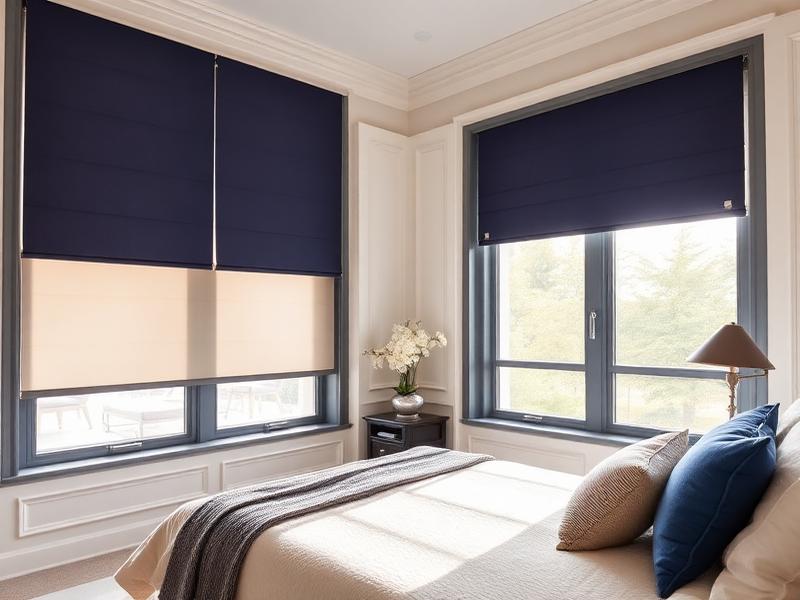
What 'blackout' actually means on the fabric label
A true blackout fabric has an opaque backing coating or a tightly woven triple-weave construction that blocks light transmission through the cloth itself. Dim-out fabrics reduce glare and soften a room without eliminating light, which is fine for a living room but frustrating in a bedroom where you want the room genuinely dark at 6am in June.
Not every fabric marketed as blackout performs the same. We show customers the fabric held up against a window before it's ordered, because a cheap blackout backing can crack or peel with age where a proper woven blackout, including ranges from Luxaflex, keeps its performance for years.
The side gap problem: why light still gets in
Even a perfect blackout fabric fitted as a standard recess roller will leave a few millimetres of light along both edges and across the bottom, because the blind has to be a little narrower than the recess to operate without binding. For most living spaces that's irrelevant. For a shift worker trying to sleep at 2pm, or a toddler who wakes at first light, it's the whole game.
The fix is the fitting, not the fabric. Side channels or a boxed frame close the gap completely by running the blind within a track on both edges, and fitting outside the recess with generous overlaps onto the wall achieves a similar result without altering the window reveal.
- Side channel systems: near-total blackout, best for nurseries and shift-worker bedrooms
- Outside recess fit with wide overlap: strong blackout without altering the window frame
- Standard inside recess fit: good darkness, a thin light line at the edges remains
- A pelmet or valance across the top hides any gap along the head rail
Roller blackout vs cellular honeycomb blackout
A blackout roller blind is the most requested option because it's tidy, affordable and available in a huge range of colours and textures, including plain, textured weave and printed designs. It's the right call for most bedrooms and for anyone wanting a simple, low-fuss upgrade.
Cellular (honeycomb) blackout blinds trap air within their cell structure, which gives a genuine insulation benefit on cold or south-facing rooms alongside the light control, and they sit flatter to the glass with a neater folded stack when raised. They cost more than a basic roller but suit period rooms and anyone also chasing a warmer bedroom in winter.
Children's rooms and nurseries
Blackout in a child's room is almost always about sleep training as much as light, and cordless or motorised operation matters more here than anywhere else in the house. Every blind we fit in a child's bedroom meets current child safety regulations, with no accessible cords, chains kept short and cleated, or a fully cordless spring or motorised mechanism as standard practice.
We'd usually pair a blackout roller or cellular blind with a light, washable secondary layer such as a voile or a Roman blind front, because a nursery that's pitch black for naps but still feels dressed for daytime is achievable without compromise.
Shift workers and daytime sleepers
If you're sleeping through daylight hours, treat the room like a hotel black-out suite: side channels or an outside-recess fit as standard, a blackout fabric rather than dim-out, and consider a second blind or curtain layer if the window faces full sun for several hours. Streetlight through thin curtains is a common complaint we hear that a properly fitted blackout blind solves on its own.
Colour, texture and living with it
Blackout no longer means a flat white or cream sheet. Textured weaves, warm neutrals, deep charcoals and printed patterns are all available with a blackout backing, so the room doesn't have to look clinical to sleep well in it. We bring the full sample range to the free home consultation so you can see how a fabric behaves against your actual wall colour and light.
The short version
Blackout comes from two decisions working together, the fabric and the fitting method, and getting the second one right is usually what separates a good night's sleep from a nearly-dark room.
Complete guide: quick answers
Next, read one of these
Discover more of our made-to-measure window dressing services across East Kent.
Blackout blinds in Kent
Our full blackout service area and fitting options.
Learn moreBlackout blinds for a specific need
Matched to the exact problem you're solving.
Learn moreNursery blinds
Cordless blackout designed around a baby's room.
Learn moreChild safety regulations explained
What every blind in a child's room must meet.
Learn more