
Shutters for glass rooms
Conservatory shutters: the honest guide
Shutters work well on the upright walls and doors of a conservatory, where the frame can sit on the dwarf wall or in the window reveals, but they are not made for the sloping glass roof. Most conservatories that end up with shutters pair them with roof blinds, so the side walls get the solid, furniture-like look and the roof gets a light, tensioned cover.
The reason people want shutters here is usually control. Louvres tilt to push sunlight up towards the ceiling, cut glare on a television or laptop, and give privacy from the garden or next door without closing the room off completely.
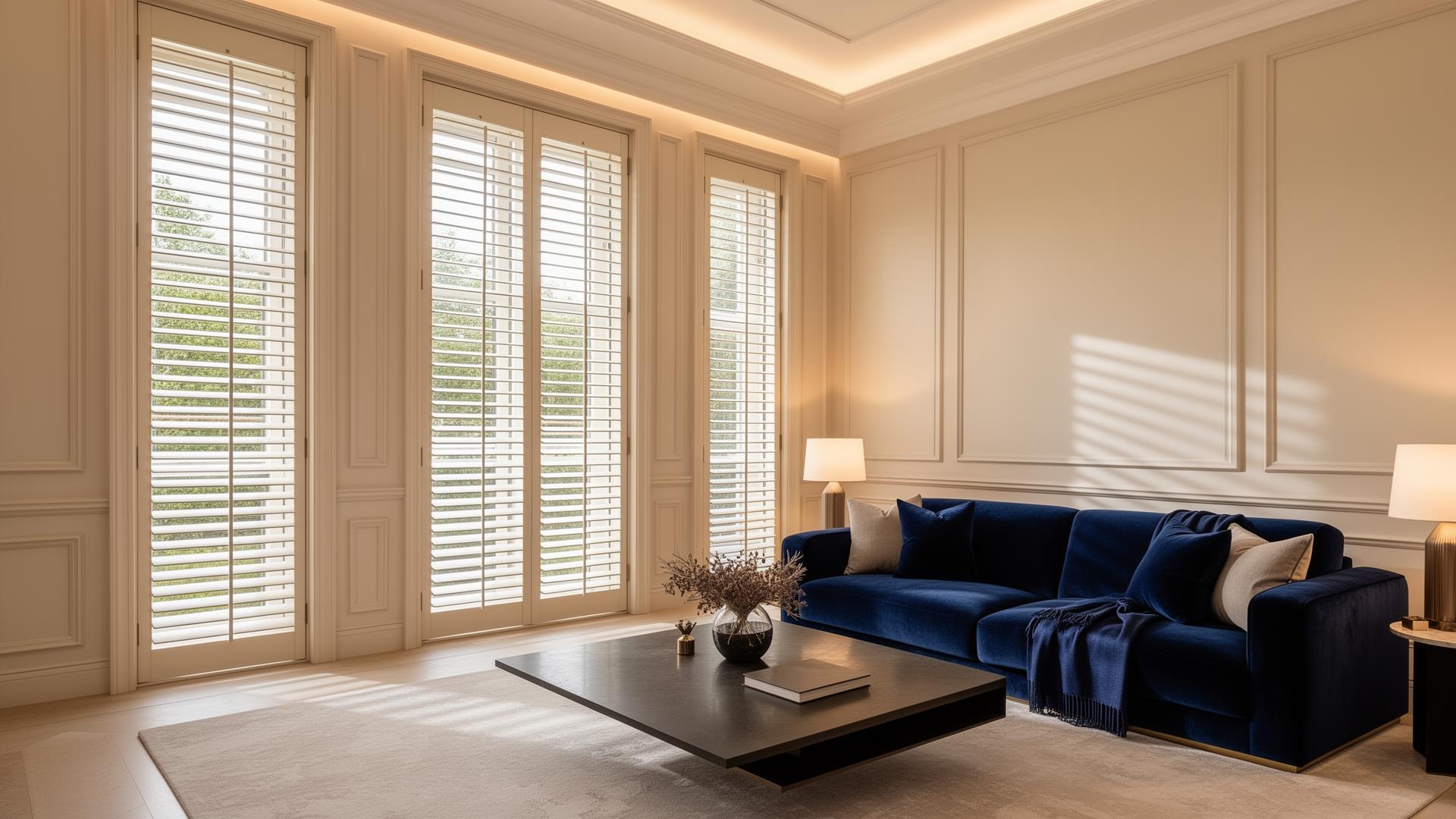
Which parts of a conservatory suit shutters
Side windows above a dwarf wall are the easiest fit: each bay of glass gets its own panel set, and the mid rail can line up with the window transom. Full glass walls down to the floor can take full height shutters. French doors and patio doors take shutters too, with tracked systems for wide sliding or bi-fold doors.
The roof is different. Shutters are heavy and hinged, and a sloping pane gives them nothing to hang from. For the roof we fit tensioned pleated blinds, including Luxaflex Duette honeycomb blinds, which stay taut on the slope and add a layer against heat and cold.
Heat, glare and fading
A shutter does not stop heat in the way a wall does, but closed or angled louvres block direct sun from the glass behind them and shade the room. Tilted up, they bounce light to the ceiling instead of across the floor, which helps with glare on screens and slows fading on furniture. In winter, closed panels add a layer in front of cold glass on the evening side of the room.
Material for a glass room
Conservatories swing between warm and cool more than any other room, and condensation can form on the glass on cold mornings. Waterproof ABS shutters handle that moisture without swelling. Hardwood can suit a well ventilated conservatory, and we look at the conditions on the visit before recommending one.
When blinds are the better choice
If the frames are narrow, the doors open inward into tight spaces, or the budget is limited, blinds usually make more sense. Perfect fit pleated or Venetian blinds clip into uPVC frames without drilling, move with the opening windows and cost less than shutters. We will say so on the visit if we think blinds suit your conservatory better.
Measuring and timing
We measure every pane, wall and door on one free home consultation so the colours and louvre lines match around the room. Shutters usually take 6 to 10 weeks and blinds 2 to 3 weeks, so if you order both the blinds can go up first. Our own fitters install everything.
The short version
Shutters on the walls and doors, tensioned blinds on the roof: that is the combination that works.
Shutters for glass rooms - your questions
Related reading
Discover more of our made-to-measure window dressing services across East Kent.