
Room by room
Making a Kent conservatory usable all twelve months
Almost every conservatory enquiry we take starts the same way: the room is a greenhouse from June to August and an icebox from November. Both problems are the glass, and both are solved by the same fitting — just for different reasons.
Roof glazing is where the heat comes in and where it leaves. Side glazing is where the glare comes from. Treating one without the other is the mistake we most often get called in to correct.
Made to measure blinds for conservatories
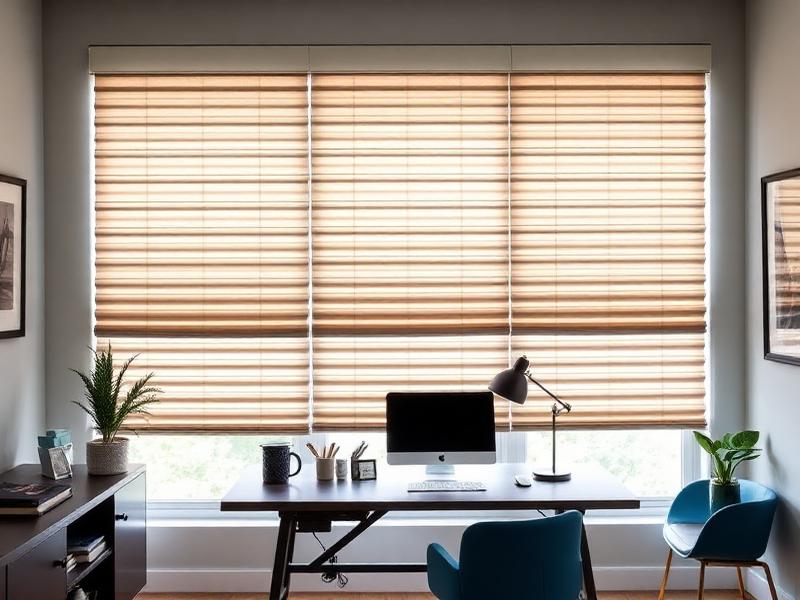
Roof blinds do the heavy lifting
A pleated roof blind with a reflective backing bounces solar gain back out before it reaches the room. In winter the same air-trapping pleat slows heat escaping upwards through the glass, which is why conservatory owners notice the difference in both directions after fitting.
Roof systems run on tensioned wires or a track, shaped panel by panel to each glazing bar. This is precision work — every pane in a Victorian-style conservatory roof is a different trapezium.
Side blinds for glare and privacy
Pleated or roller blinds on the vertical glazing handle low sun and neighbour overlooking. Verticals still suit long runs of glazing and door panels, and they let you angle light off the seating area without shutting the garden out.
For a conservatory used as a dining or garden room, we usually pair a reflective roof system with plain pleated sides so the room reads calm rather than busy.
Polycarbonate versus glass roofs
Polycarbonate roofs run hotter and noisier in rain. A blind will not silence the rain, but a fitted pleated system audibly softens it and takes the worst of the heat.
Glass roofs with a solar-control coating already reduce gain; the blind then mostly manages glare and winter heat loss, and we will say so rather than over-specify.
Roofs, sides and doors as one plan
Most conservatories need three kinds of blind: tensioned roof blinds, side window blinds and something for the doors. We measure every pane on one free home visit so the fabrics and colours match across the room. Pleated and Luxaflex Duette blinds suit roof panes; rollers, Venetians or perfect fit blinds suit the sides. Conservatory systems can take a little longer than our standard 2 to 3 weeks, and we confirm the timeline at the visit.
Room by room - your questions
Related reading
Discover more of our made-to-measure window dressing services across East Kent.
Lantern roof blinds
Roof glazing in an extension rather than a conservatory.
Learn morePleated vs roller for conservatories
Which fabric system suits your roof.
Learn moreThermal blinds
Insulating fabrics and how they work.
Learn moreGarden room blinds
The modern alternative to a conservatory.
Learn moreConservatory shutters
Where shutters suit a glass room.
Learn more