
Product guide
The decisions that make a Roman blind look right, not just fit
A Roman blind is closer to soft furnishing than to a mechanical blind, which is exactly why it rewards a bit more thought before ordering than a roller does. The fabric hangs in neat horizontal folds when lowered and stacks into a flat pleated pile at the top when raised, giving a tailored, almost curtain-like look that suits formal living rooms, dining rooms and period bedrooms particularly well.
Because the fabric is the visible structure of the whole blind, not just a printed surface on a roll, the weight of the cloth, the lining behind it and the depth it stacks to when open all affect how the finished blind actually behaves on your window, not just how it looks in a sample book.
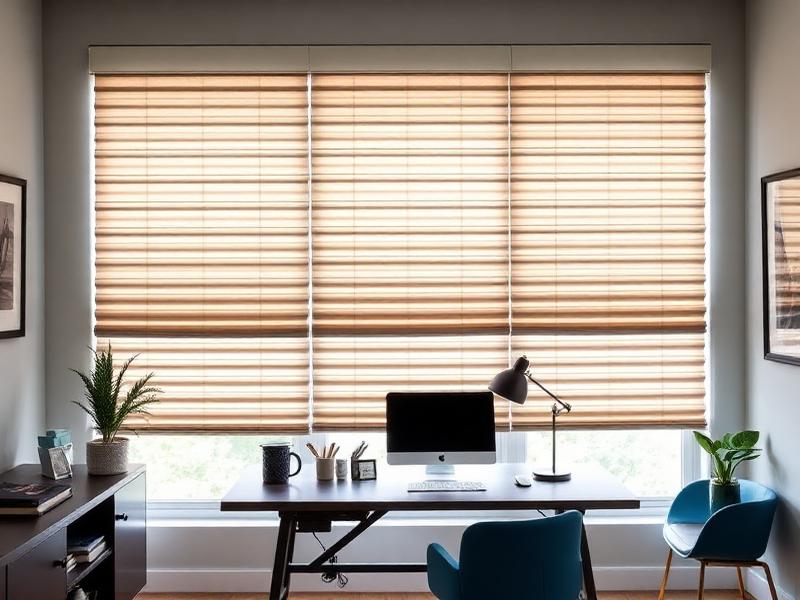
Fabric weight and why it changes everything
A lightweight cotton or linen-look fabric folds into soft, slightly informal pleats and suits a relaxed bedroom or a smaller window where a heavier cloth would look overbearing. A heavier furnishing weight fabric, of the kind you'd expect on formal curtains, holds a crisper, more architectural pleat and suits a period living room or dining room with tall proportions.
The wrong weight for the fold style you want is the most common disappointment we see with off-the-shelf Roman blinds: too light a fabric can sag between folds, and too heavy a fabric on a small window can look stiff rather than soft.
Lining and interlining explained
A standard lining is sewn to the back of the face fabric, giving the blind a uniform appearance from outside the house, protecting the visible fabric from sun fade, and adding a degree of light control and thermal benefit. Interlining adds a soft, often brushed layer of wadding between the face fabric and the lining, giving a plumper, more luxurious fold, extra insulation, and noticeably better light blocking, at a higher price than a lined-only blind.
For a period bedroom or a formal room where budget allows it, interlining is usually worth the extra: the fold looks fuller and the blind performs better in both winter and summer. For a simpler room or a tighter budget, a good lining alone still gives a very presentable result.
- Unlined: rare, used mainly for pure light-filtering decorative effect
- Lined: the standard choice, protects fabric and gives a uniform outside appearance
- Interlined: fuller pleats, better insulation and light control, higher cost
- Blackout lining: available where a Roman blind needs to double as a bedroom blackout
Stack depth: the detail people forget to plan for
When a Roman blind is fully raised, the folded fabric piles up at the head of the window rather than disappearing into a roller tube, which means a real depth of stacked fabric, often ten to twenty centimetres depending on the drop and lining, sits across the top of the glass even when the blind is fully open. On a tall window this is barely noticeable; on a shorter window it can meaningfully reduce the visible glass and the light let in.
This is worth planning for at the measuring stage, particularly if the blind is fitted above the window onto the wall or frame rather than inside a deep recess, since the stack needs somewhere to sit without blocking light from a low sill or obstructing a window handle.
Cords, chains and child safety
A traditional Roman blind operates on a corded pulley system, and any exposed cords must be fitted with a cleat or tensioner fixed to the wall in line with current child safety regulations, keeping any loop safely out of reach. Where a Roman blind is going into a child's bedroom or nursery, we'd generally recommend a cordless or chain-and-cleat system instead, so the softness of the fabric doesn't come with a safety compromise.
Where Roman blinds work best
Formal living rooms and dining rooms with tall sash or casement windows suit the tailored, furnished look particularly well, especially where a heavier fabric picks up other soft furnishings in the room. Period bedrooms benefit from the softer alternative to a shutter or roller, especially paired with an interlined or blackout-lined fabric for warmth and darkness together.
The short version
A Roman blind is judged on its fold, so choose the fabric weight and lining for the pleat you actually want, then plan the stack depth before the tape measure ever comes out.
Product guide - your questions
Related reading
Discover more of our made-to-measure window dressing services across East Kent.
Bedroom shutters
A furniture-grade alternative to compare against fabric.
Learn moreBespoke blinds in Kent
Fully made-to-measure fabric, lining and interlining options.
Learn moreCleaning and caring for blinds
Looking after interlined and lined fabric long term.
Learn moreGallery
Roman blinds fitted in real Kent homes.
Learn moreRoller vs Roman blinds
Which suits each room.
Learn more