
Room by room
Bedroom shutters, and how dark they really get
The single most common bedroom question we get on a home visit is whether shutters go properly dark. The honest answer is: darker than most people expect, but not as dark as a blackout blind in a blackout cassette.
Where a shutter wins is everything else — no cords near a cot, no fabric to launder, no summer flapping with the window open, and a finish that looks like part of the house rather than something hung on it.
How much light gets through
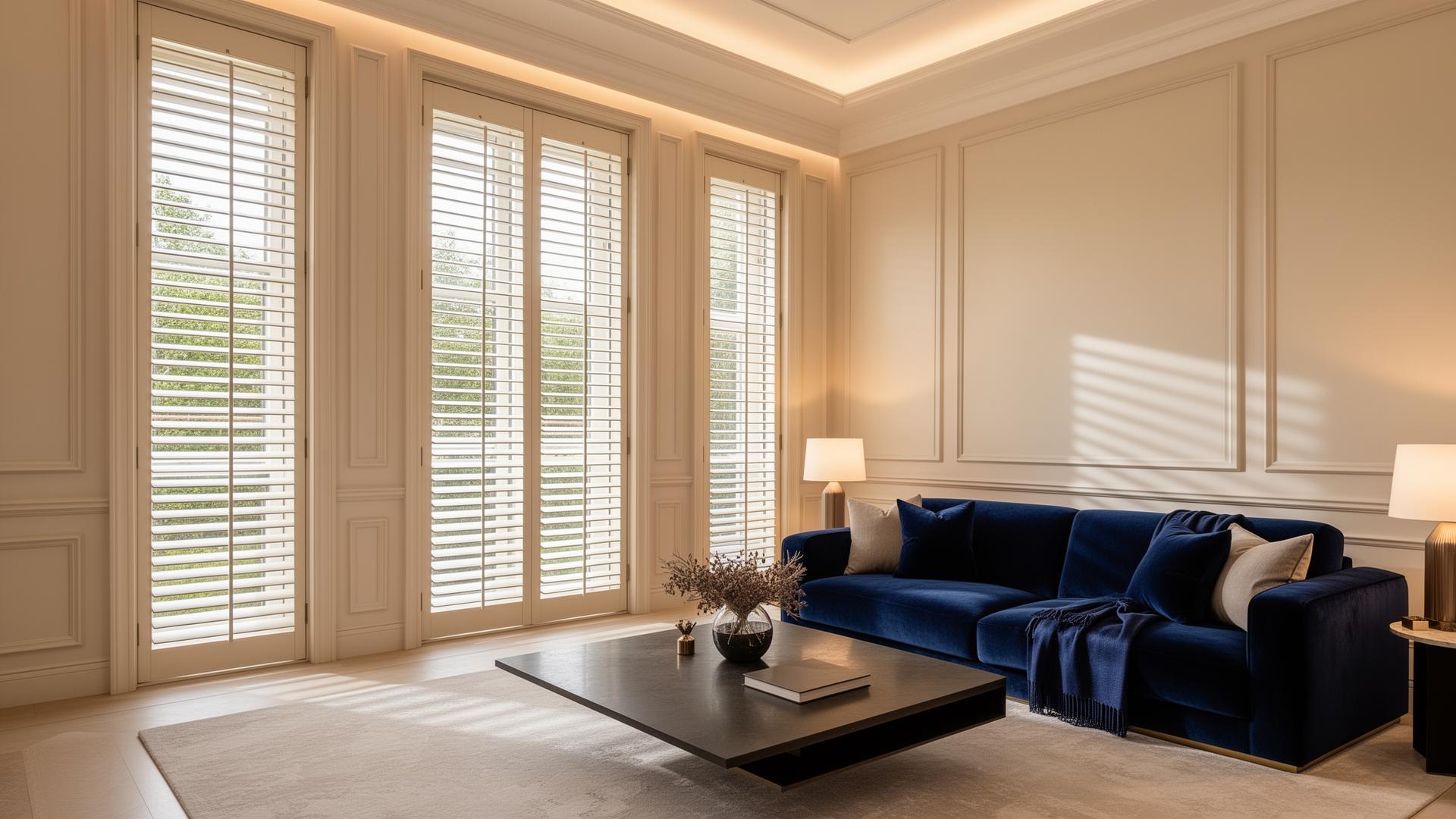
A closed, downward-tilted louvre lets a thin line of light through at each slat overlap and around the frame. In a bedroom facing a lit street you will notice a faint glow, not a beam.
Three ways to go darker: choose a smaller louvre size so there are more overlaps; specify solid panels on the lower tier; or pair the shutter with a blackout roller behind it, which is what we fit in most nurseries and shift-worker bedrooms.
Configurations that suit bedrooms
Bedroom windows are usually smaller and more overlooked than reception windows, which changes the layout.
- Tier-on-tier — bottom closed all night, top opened at dawn without getting out of bed on the far side
- Solid panel bottom, louvred top — the darkest all-shutter option
- Café-style — only if the window is high and the room is not overlooked from above
- Full-height with a mid-rail — simplest and cleanest for a standard casement
Why cordless matters upstairs
Any blind with a looped cord in a room a child sleeps in has to be fitted with a compliant tensioner or breakaway device by law. Shutters remove the question entirely — there is no cord, no chain and nothing to reach.
Every corded blind we fit in Kent leaves with the correct child-safety device installed and demonstrated, but in bedrooms the cordless conversation usually ends with a shutter.
Room by room - your questions
Related reading
Discover more of our made-to-measure window dressing services across East Kent.