
Materials guide
Choosing between hardwood and engineered wood shutters
Once a homeowner has ruled out ABS waterproof shutters because the room is dry, the choice narrows to two genuinely different products that can look almost identical from across the room: poplar hardwood and engineered MDF. The difference shows up in weight, stability and how each behaves in a Kent house that goes through damp winters and warm, dry summers.
This guide covers what separates the two materials structurally, how timber actually moves through the seasons, then the finish choices, paint, stain and natural grain, that decide how the shutter reads once it is on the wall.
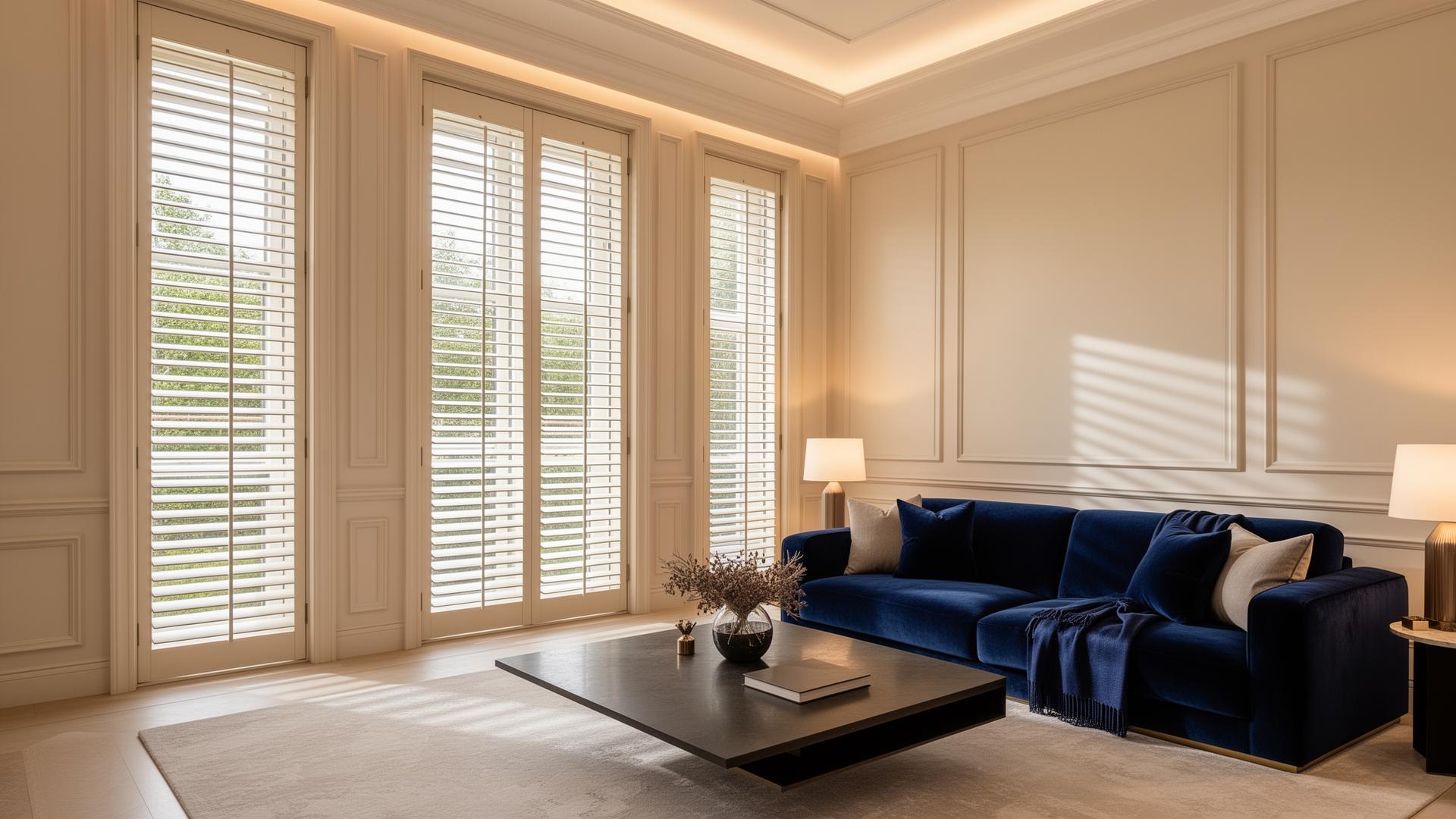
Poplar hardwood
Poplar hardwood is lighter and stiffer than engineered wood for the same panel size, which matters most on tall or wide panels that need to stay dead straight without sagging over the years. It takes a painted finish extremely well and is the material we default to on larger living room and bedroom windows.
Engineered wood (MDF)
Engineered MDF ranges are denser and more affordable, and in a dry, stable room such as a study or a north-facing bedroom there is no practical reason to spend more on hardwood. Where engineered wood struggles is in rooms with real humidity swings, where it is more prone to movement over time than poplar hardwood.
How timber actually moves through the seasons
Wood is never fully inert, even once painted and hung. It expands slightly as humidity rises in a damp winter and contracts a little as central heating dries the air out in the same house a few weeks later. A well-made panel is designed with enough tolerance in the frame and louvre pins to absorb this movement invisibly, which is why panel and frame quality matters more than it might seem from the showroom. A poorly made panel, in either material, is where you start to notice a louvre that binds slightly in January and rattles a touch in July.
Painted finishes
A painted finish, in white or a colour matched to the room, is by far the most requested option and suits both materials well. It is also the most forgiving finish if a panel ever needs a light touch-up years down the line, since a colour match is straightforward.
Stained and grain finishes
A stained, visible-grain finish only really works on hardwood, since it is the timber itself being shown off rather than a painted surface. This suits period cottages and houses with a lot of existing exposed timber, where a painted shutter would look slightly out of place against original beams or floorboards.
- Painted white: the most versatile option, suits almost any room and property age
- Painted to a matched colour: ties the shutter into the wall or woodwork scheme
- Stained grain finish: hardwood only, suits cottages with exposed timber elsewhere
- Natural oiled finish: a lighter-touch alternative to full stain, still hardwood only
Humidity: the deciding factor
Bathrooms, en-suites and kitchens with a lot of steam are not right for either wooden option; that is what ABS waterproof shutters are for. But within dry rooms, a conservatory or a room with poor ventilation and regular condensation on the glass is where hardwood earns its higher price over engineered wood.
What a period cottage owner usually chooses
For an older Kent cottage with original sash or casement windows, we most often recommend poplar hardwood in either a painted or stained finish, matched to whichever original joinery is still on show in the room. It ages more gracefully against timber floors and skirting than an engineered panel does.
Caring for a wooden shutter long term
Both hardwood and engineered wood need very little upkeep once fitted. An occasional dry dust or a wipe with a barely damp cloth keeps the louvres clean, and a painted finish can be lightly touched up years later without needing to refinish the whole panel. What both materials do need is protection from standing moisture, which is why neither belongs directly beside a shower or above a bath regardless of how good the paint finish is.
What a new build owner usually chooses
In a new build home around Ashford with consistent, well-sealed openings and stable internal humidity, engineered MDF is very often the sensible default across bedrooms and living rooms, with the budget saved against hardwood put towards covering more windows in the house or upgrading louvre size instead. Hardwood still earns its place on any larger picture windows or a particularly tall bay front.
The short version
A grounded comparison of hardwood and engineered wood shutters, how paint, stain and grain finishes behave, and where humidity should steer the decision.
Materials guide - your questions
Related reading
Discover more of our made-to-measure window dressing services across East Kent.
Plantation shutters cost guide
How material choice affects your quote.
Learn moreDining room shutters
Timber finishes suited to dining spaces.
Learn moreSash window shutters
Fitting shutters to original sash windows.
Learn morePlantation shutters
Browse hardwood and engineered wood ranges.
Learn moreHardwood vs waterproof shutters
Choosing the material.
Learn more