
Room by room
Dining rooms: candlelight in, streetlight out
A dining room is used at the two extremes of the day — breakfast light and evening lamplight — and almost never in between. That changes the brief entirely from a living room.
The window dressing has to look considered from the table and from the street, because at 8pm with the lights on, everyone outside can see in.
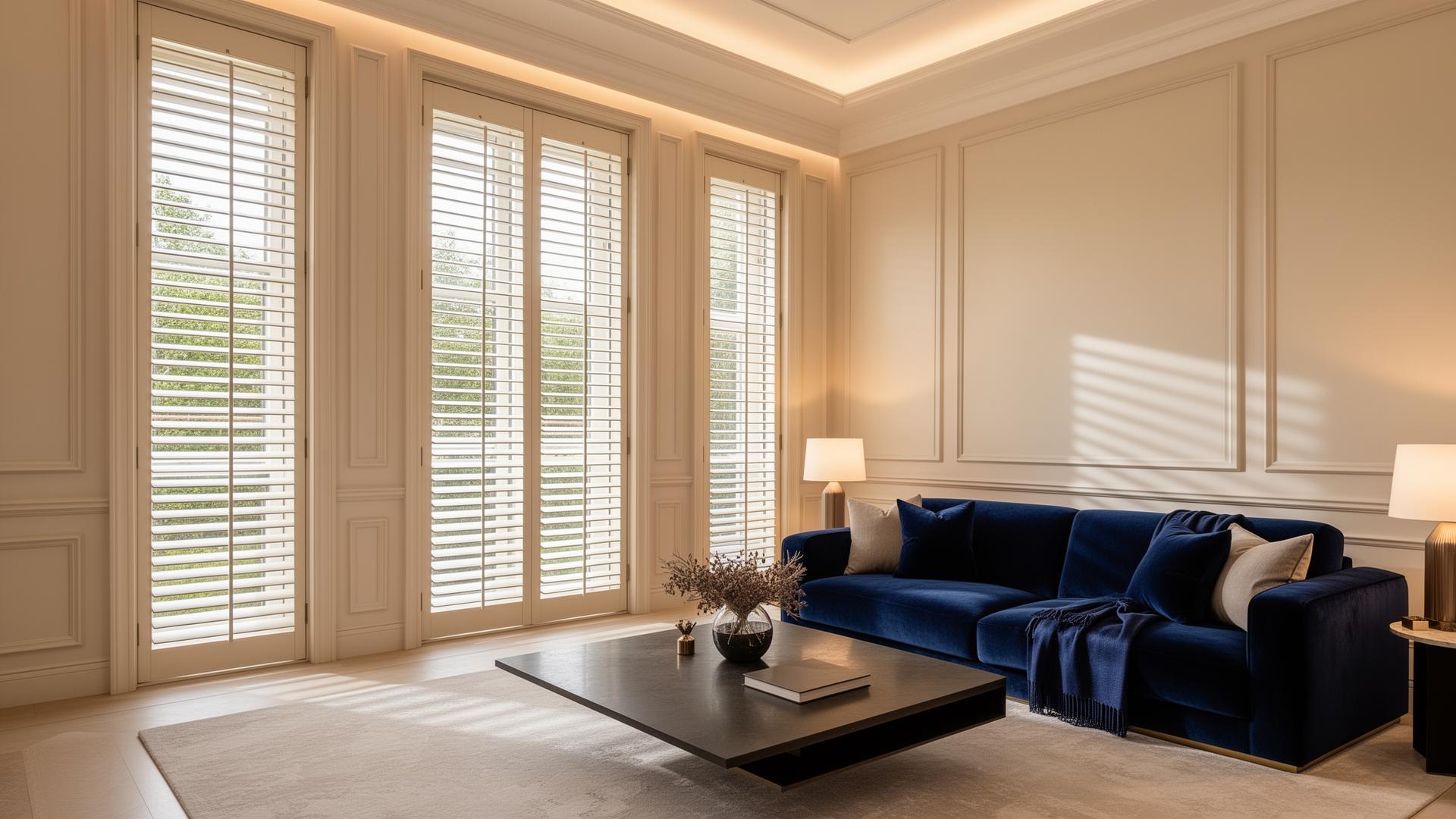
Why shutters suit dining rooms
Closed louvres at night give total privacy while the panel face still reads as joinery rather than as a drawn blind. In a period Kent dining room with a picture rail and cornice, a painted shutter looks like it belongs to the architecture.
By day, tilting the louvres up pushes morning light across the ceiling and onto the table without glare on polished wood.
Layouts for common dining windows
Dining rooms often sit at the back of a Kent terrace with a single large window or a set of French doors onto the garden.
- Full-height shutters with a mid-rail — the standard for a single rear window
- Tier-on-tier — for a front dining room facing a pavement
- Track-mounted shutters — for French or patio doors that need to slide clear
- Café-style — where the top of the window is high and unoverlooked
Colour choices under lamplight
Bright white shutters can look cold under warm dining lighting. Off-whites and soft greys hold their tone in the evening, and we will show you samples under a lamp rather than only in daylight.
RAL colour matching is available if you want the shutter to pick up a skirting or panelling colour exactly.
Room by room - your questions
Related reading
Discover more of our made-to-measure window dressing services across East Kent.