
Privacy
Privacy on a street where the pavement is two metres away
Most privacy problems are geometric. People walking past look horizontally, so you only need to block the lower half of the window, and blocking the whole thing is why so many front rooms feel like caves.
Split the window and you keep the sky, which is where the useful daylight comes from anyway.
Made to measure blinds for privacy
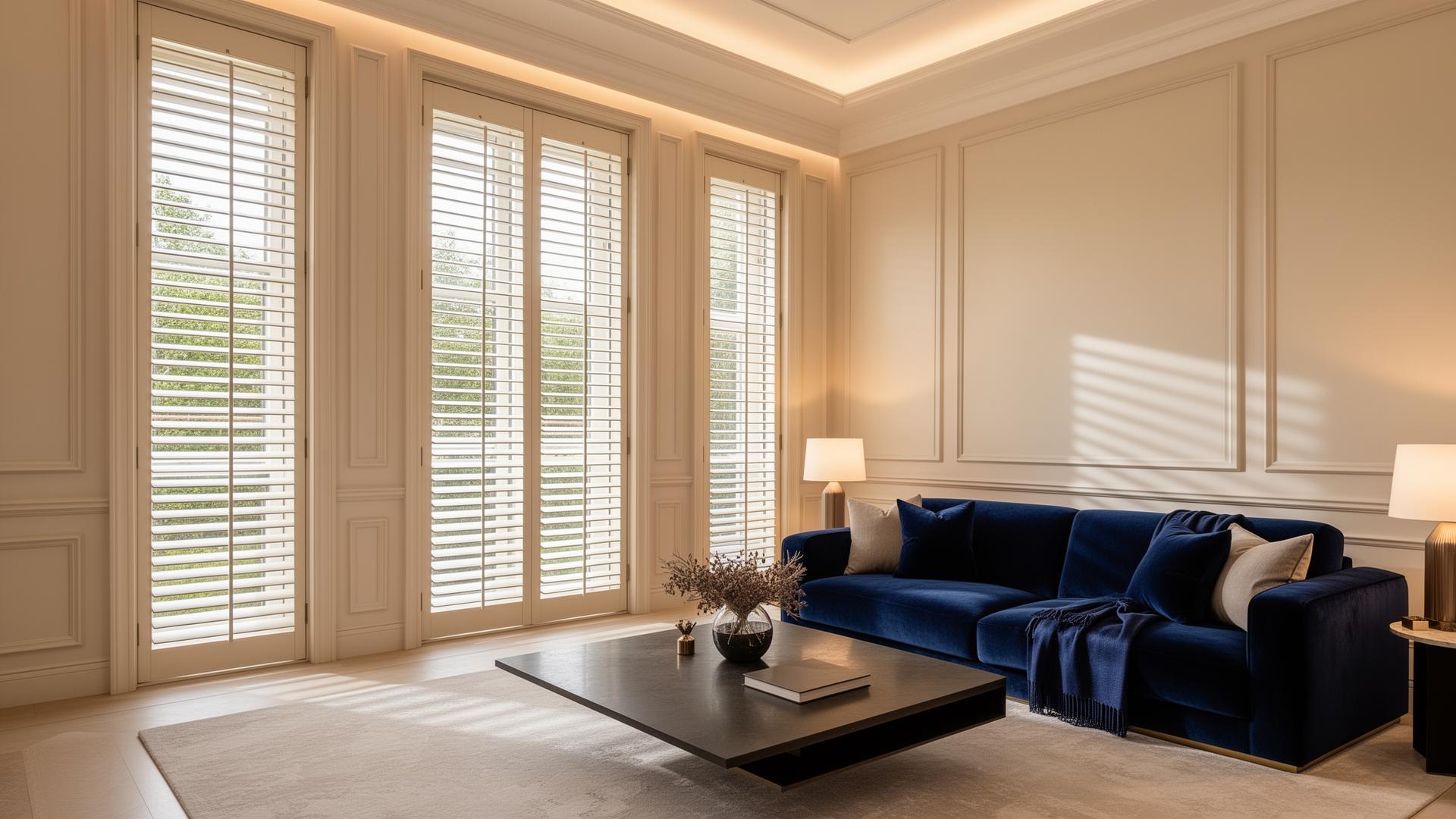
Cafe style shutters
Panels on the bottom half only, open glass above. This is the classic answer for Victorian and Edwardian terraces in Folkestone, Hythe and Ashford, and it is also the cheapest shutter configuration because you are dressing half the opening.
- Cafe style shutters: lower half covered, upper half clear.
- Tier on tier: same effect but with the option to close the top at night.
- Top down bottom up blinds: raise from the sill rather than lowering from the head.
- Screen fabrics: see out during daylight, obscure from the street.
How screen fabrics behave after dark
Daylight privacy and night time privacy are different problems. Screen fabric reverses once your lights are on and the street is dark, so in a bedroom or a front lounge we pair it with a second layer or specify a tier on tier shutter instead.
Bathrooms and side returns
For an overlooked bathroom, a tilting louvre above a solid lower panel gives you total cover at eye height and full daylight above it, with no frosted film needed on the glass.
Privacy - your questions
Related reading
Discover more of our made-to-measure window dressing services across East Kent.