
Wooden blinds
Wooden blinds: real timber and faux wood
Wooden blinds are Venetian blinds with timber or wood-effect slats. They give a room the warmth and solidity of shutters, tilt to control light and privacy, and cost less than a full set of shutter panels.
Choosing between real and faux wood comes down to the room. We bring both to a free home visit so you can see and feel the difference.
Wooden blinds by room
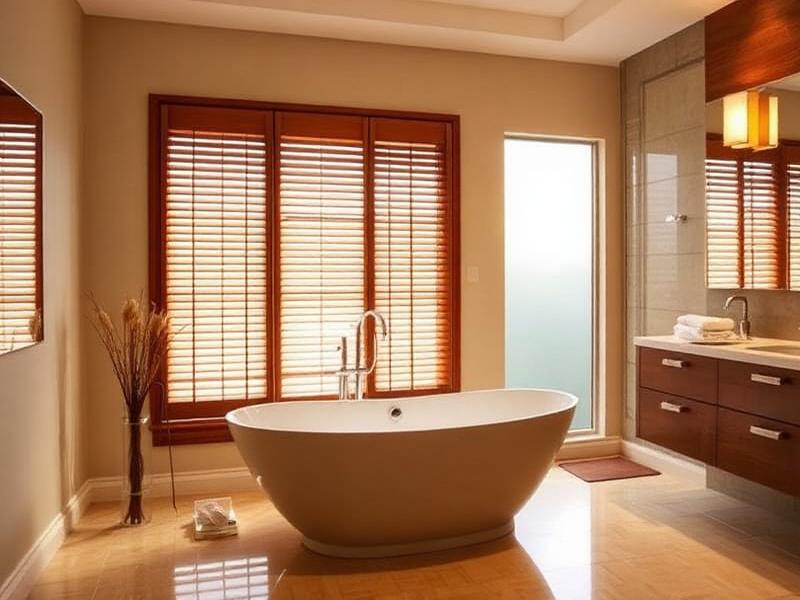
Real wood: grain, weight and warmth
Real wood slats show a natural grain that painted or stained finishes let through, from pale oak tones to dark walnut. They feel substantial and suit living rooms, dining rooms, studies and bedrooms. Because timber reacts to moisture, we do not recommend real wood for bathrooms, en-suites or right behind a kitchen sink.
Real wood is heavier than aluminium, so on a very wide window we may suggest two blinds side by side so each is easy to raise.
Faux wood: the look, for damp rooms
Faux wood slats copy the look of painted timber in a material that shrugs off steam and splashes. They will not warp in a bathroom and they wipe clean, which also makes them popular in kitchens, utility rooms and rental properties. Up close real wood has more depth, but across a room most people cannot tell them apart in white or cream.
Choosing colour and slat size
A few practical points we cover at the visit:
- White and soft whites brighten a room and echo painted shutters.
- Natural and stained finishes suit period homes and rooms with wooden floors or furniture.
- Wider slats give a more shutter-like view when open; narrower slats suit smaller windows.
- Decorative tapes hide the cord holes, cut light leaks and add a contrasting stripe if you want one.
Wooden blinds or shutters?
If you love the look of shutters but want something quicker and lighter, wooden blinds are the natural alternative. Shutters are fixed to the frame, last longer and usually take six to ten weeks; wooden blinds are usually fitted in two to three weeks and can be raised clear of the glass. Our shutters vs blinds guide covers the trade-off in detail.
Fitting and aftercare
We measure at the visit, checking the reveal depth so the tilted slats clear the window handles, and our own fitters install every blind. Dust real wood with a dry cloth; faux wood can be wiped with a damp one. Each blind carries the manufacturer's warranty plus our fitting guarantee.
Rooms where wood looks at home
Real wood suits period homes with wooden floors, dining rooms where the grain matches the table, and studies where the tilt keeps glare off a screen. Faux wood suits kitchens, bathrooms and busy family rooms. In bedrooms either works, often with a blackout roller behind for summer mornings.
Bays and matching sets
Wooden blinds in a bay are measured face by face so the slats line up across the whole bay at the same height. Matching colours through a room, or through a whole floor, gives the house a calm, joined-up look from outside.
Measuring for a wooden blind
Wooden slats are deeper than aluminium ones, so the reveal needs to be deep enough for them to tilt without hitting the glass or the window handles. We measure the depth, width and drop on the free home visit and check whether the blind should sit inside or outside the recess. Where the reveal is shallow, an outside fit on a neat headrail often looks better and blocks more light at the edges. Standard wooden blinds are usually fitted in 2 to 3 weeks, with temporary blinds available.
The short version
Real wood for warmth in dry rooms, faux wood where there is steam.
Wooden blinds - your questions
Related reading
Discover more of our made-to-measure window dressing services across East Kent.