
Window shapes
Bay windows: three apertures, one continuous look
A bay is not one window, it is three or five windows meeting at angles that are almost never the angle you assume. Splayed bays in Folkestone and Hythe terraces commonly run at 45 degrees; square boxed bays run at 90; Victorian canted bays land somewhere in between and are frequently out by a degree or two.
Measured individually and fitted with the correct corner treatment, a bay reads as a single continuous run. Measured as one width, it looks like three blinds hung near each other.
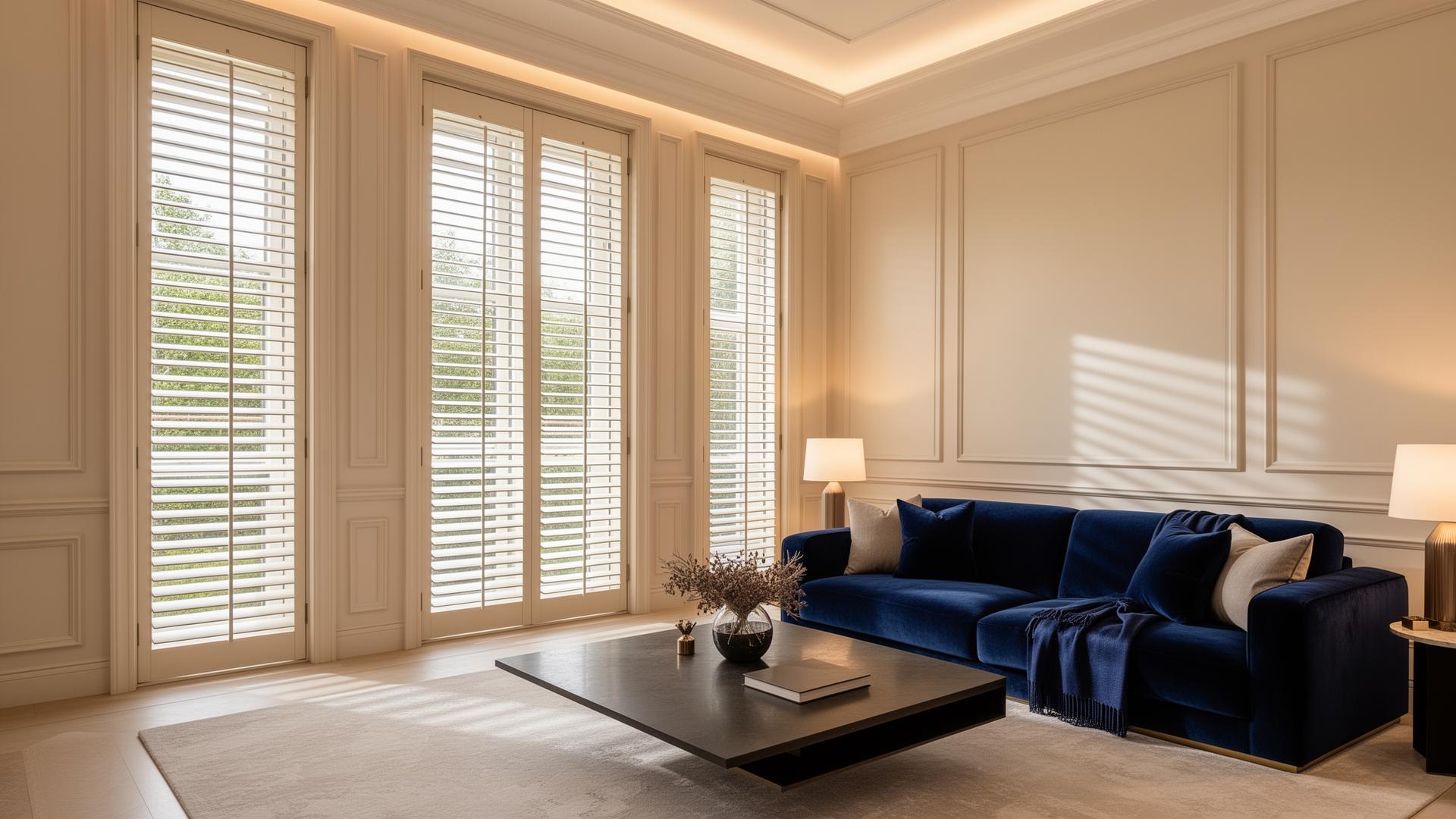
How we measure a bay
Every aperture gets its own width and drop, taken at three heights, plus the internal angle at each mullion. On a shutter, the frames are then mitred to those exact angles so the panels meet cleanly in the corner with no wedge of daylight.
For blinds, we set the headrail gaps deliberately so the fabric edges align visually across the whole bay rather than stepping.
What suits a bay
The bay type usually decides the product before taste does.
- Plantation shutters — the strongest look on a period bay, and the only option that follows the angles exactly
- Roller blinds — clean and inexpensive, but each aperture reads separately
- Roman blinds — beautiful on a square bay, awkward on a tight splay
- Vertical blinds on a curved track — the traditional answer for a modern bow
Radiators and window seats
Most bays have a radiator under the centre pane or a built-in seat. Both change the drop. Blinds are usually finished at sill level over a radiator so the heat is not trapped against the glass; shutters are set into the recess above the seat with the frame scribed to the cushion line.
Window shapes - your questions
Related reading
Discover more of our made-to-measure window dressing services across East Kent.