
Light through the fabric
Sheer blinds for soft, filtered daylight
Sheer blinds use a fine, translucent fabric that lets daylight through while softening glare and taking the edge off the view in from outside. They suit rooms where you want brightness more than darkness: a living room facing the street, a kitchen window over a sink or a landing where a solid blind would make the space feel closed in.
Sheer is a fabric choice rather than a single product. A sheer fabric can be made up as a roller, a pleat or a soft vane design, and each behaves differently on the window. At a free home consultation we bring sheer samples to hold against your own glass and our own team fits the finished blinds.
Sheer roller blinds
The simplest route is a roller with a sheer or translucent fabric. It drops as one flat piece, gives an even glow across the window and rolls away almost completely when you want the full view. Rollers sit well inside a recess and are a good choice on smaller windows and in rooms where you want a clean, plain look.
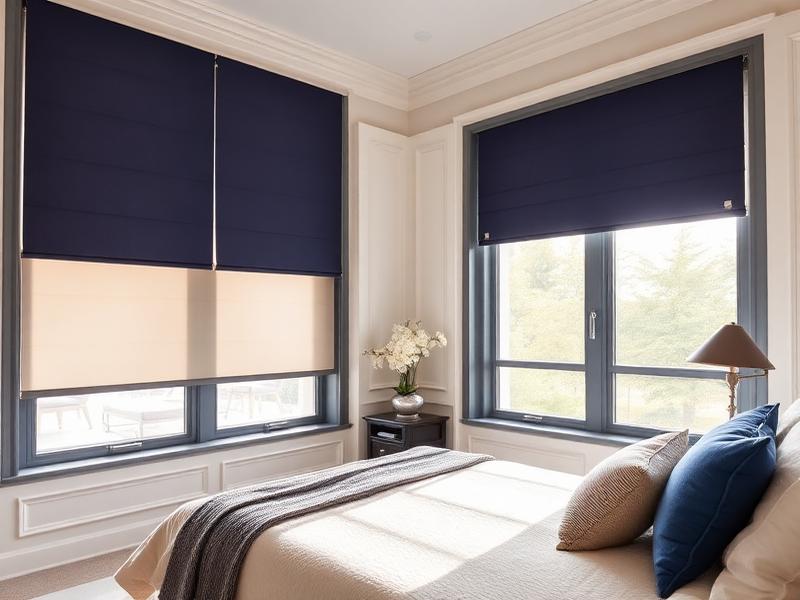
A sheer roller often works as one half of a pair. On a double bracket, a sheer roller behind a Roman or a blackout roller gives daytime privacy from one blind and full cover from the other, each working independently. We check the reveal depth at the visit to make sure there is room for both.
Sheer and solid in one blind
If you want to switch between soft light and privacy without a second blind, look at designs that combine sheer and solid fabric. [Day and night blinds](/blinds/day-and-night-blinds) alternate sheer and solid bands that slide past each other, while Luxaflex Silhouette suspends fabric vanes between two sheer layers so the light stays gentle even when the vanes are open.
For wide patio doors, an [allusion blind](/guides/allusion-blinds-explained) uses soft fabric vanes and sheer sections on a single headrail, rotating between a sheer look and a closed one. These options cost more than a single sheer roller but do two jobs in one product.
Pleated sheers and shaped windows
Pleated fabrics range from sheers that soften the light through to dim-out and blackout options. A sheer pleat stacks into a slim band when raised and can be made to suit shapes a roller cannot, such as tilt-and-turn windows, conservatories and some angled frames. Where a suitable uPVC bead allows, a clip-in [Perfect Fit](/blinds/perfect-fit-blinds) frame keeps the fabric close to the glass.
See the full [pleated blinds](/blinds/pleated-blinds) range if a shaped or opening window is the main reason you are looking at sheers.
Privacy after dark
A sheer fabric gives good privacy in daylight, when the outside is brighter than the room. Once the lights go on indoors the balance reverses, and people outside can see shapes and movement through the weave. For a street-facing room that you use in the evening, plan either a layered blind or a sheer and solid design so the window can close properly at night.
Colour matters too. A white sheer looks bright and fresh from inside, while a grey or darker sheer tends to give a clearer view out and hides more of the room from outside in daylight. Holding both against your window at the free home consultation is the quickest way to decide.
Light through the fabric - your questions
Related reading
Discover more of our made-to-measure window dressing services across East Kent.