
Cover the glass, keep the door usable
Door blinds for single doors and glass panels
Door blinds need to do more than cover a pane. A front door must still open freely, its handle must stay easy to reach, and the blind should not catch against the surrounding frame. For a single back door or a narrow glass panel, those practical details can matter more than the fabric colour.
Start with the glass you want screened and the way the door moves. A blind attached to a suitable opening frame follows the door; one fitted above the doorway stays in the room and may need raising before you pass through. We compare the fitting position and measure at a free home consultation before you choose.
Front door privacy without losing daylight
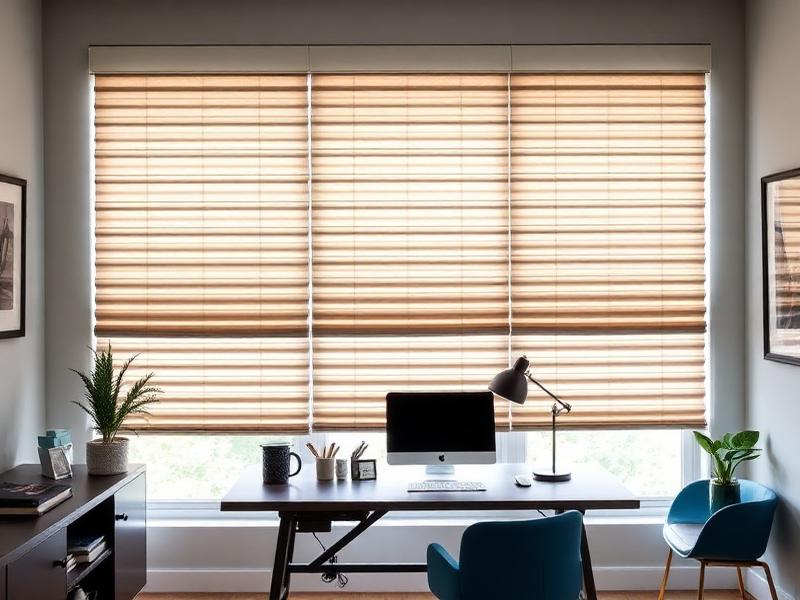
Blinds for front door glass can screen an entrance from the pavement while leaving the hallway bright. A translucent pleated fabric filters incoming light, while Venetian slats let you adjust the view through the pane. Think about whether you want to see someone approaching or prefer the glass covered whenever the door is closed.
Daylight privacy and evening privacy are different. A sheer fabric that obscures the hallway during the day can reveal shapes when the lights are on inside. If night-time screening matters, compare a more opaque fabric or a slatted option that closes. Hold samples against the actual pane rather than deciding from a photograph.
Blinds for uPVC doors: check the frame first
Perfect Fit and Intu are no-drill options to consider for compatible glazed uPVC doors. Suitability depends on the glazing bead, the seal and the space around the handle. The blind needs a secure fitting and enough clearance throughout the door's movement, not just while it stands closed.
Different panes within the same door can need separate measurements. A panel below a horizontal rail should not be treated as one continuous pane with the glass above it. On a door with decorative or unusually shaped glass, the practical fitting space needs checking before a frame-fitted system is selected.
The opening arc and the handle
On an inward-opening door, check what sits beside it: a wall, furniture or a radiator can limit clearance once a blind is added. The projecting handle also needs space to turn without pressing into fabric or slats. A shallow-looking blind can still interfere with the door when it is fully open.
A roller fixed above the opening is another arrangement, but plan where its bottom bar sits and how you will raise it before using the door. For a separate fixed side panel, a stationary blind may be perfectly practical. Matching the fabric does not mean the door and its side glass must share the same fixing method.
Choose for everyday use
If you open the door frequently, choose a control you can reach comfortably and a blind that stays out of the way. A tensioned pleated option can keep fabric close to suitable glazing; a Venetian offers tilt control. Avoid choosing solely for blackout if it makes an entrance awkward to use.
Glass beside a kitchen door may need a fabric or slat finish that is easier to clean than a decorative folded blind. Compare cleaning guidance for the chosen material, especially where hands regularly touch the frame. Door blinds should leave access to locks and any ventilation features, with cords and chains positioned safely.
A measured quote for the complete fitting
The quote depends on pane size, the number of separate blinds, fabric or slat choice, and the fitting system. We bring samples, take measurements and leave a written no-obligation quote. Standard blinds usually take 2 to 3 weeks from ordering; the timing for your chosen system is discussed before the order is placed.
Our own team fits the finished blinds. If your opening is a pair of French doors, a sliding patio door or a folding wall of glass, use the dedicated pages below: those layouts have different clearance and stacking decisions from a single glazed door.
Cover the glass, keep the door usable - your questions
Related reading
Discover more of our made-to-measure window dressing services across East Kent.