
A wide view, a practical blind
Large window blinds: compare the way each option works
Large window blinds should suit the whole opening, not simply fill its width. A broad picture window may need glare control without losing the view, while a tall expanse of glazing may need a control you can reach. Size changes how fabric hangs, where the blind gathers and how it feels to operate.
Before choosing wide window blinds, decide what must remain clear: the centre of the view, an opening sash, or furniture beside the glass. Then compare a single blind with a divided layout. Made-to-measure does not mean every fabric and mechanism is suitable for every span; the selected system has to suit the measured opening.
Tilt, lift or slide?
Vertical blinds rotate their louvres for adjustable light and draw sideways when you want the view. They avoid lifting a broad sheet of material, but their gathered slats still occupy space at the chosen side. The draw direction deserves as much thought as the fabric.
A roller gives a continuous flat surface and rolls upwards, leaving the sides of the window clear. Venetian blinds offer slat-by-slat light control but gather above the glass when raised. Panel blinds slide wider fabric sections along a track. These are different ways of using the window, not interchangeable looks with identical operation.
One broad blind or separate sections
A single blind gives fewer divisions, but its width, drop and material have to be supported by the chosen system. Splitting the opening can make each section easier to operate and let you shade one part while leaving another uncovered. It can also suit glazing that already has clear vertical frame divisions.
Place the breaks deliberately. A join through the middle of a favourite view may be distracting, while a break aligned with a mullion can look natural. Separate rollers leave small gaps between their fabrics; separate Venetians have individual stacks and controls. Compare the closed appearance as well as how much glass is exposed when open.
Where the blind goes when it is open
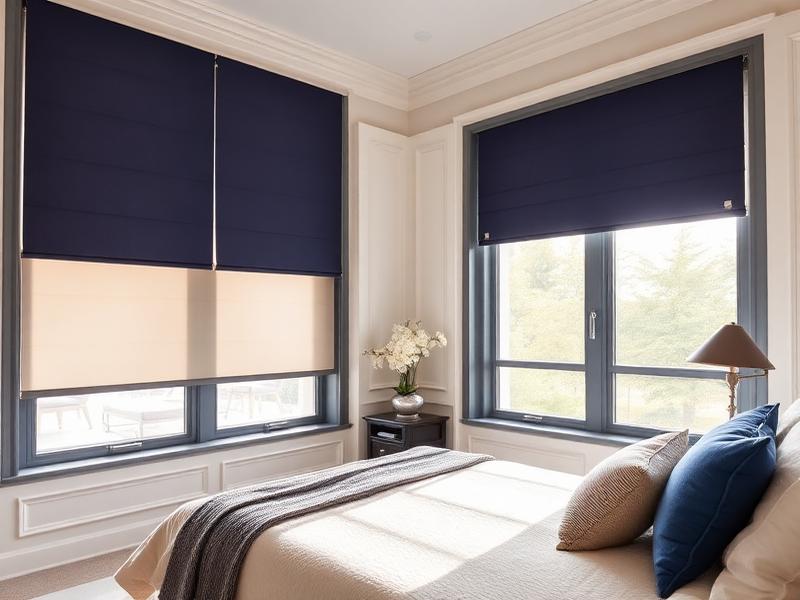
Large glazing needs room for the blind as well as room for its movement. A vertical or panel blind can gather over part of the glass if there is no wall space beside it. A raised Roman leaves fabric folds above the opening, and a raised Venetian forms a stack of slats.
We measure the recess, headroom and adjacent wall during the free home consultation. On a window close to a ceiling, the fitting position can change how much daylight is lost behind the stack. If a sofa or desk prevents easy access to a control, consider operation before choosing the colour.
Light across a broad pane
Blinds for big windows can address glare without making the whole room dark. A light-filtering roller softens daylight as one surface. Tilting vertical or Venetian slats gives an adjustable balance between screening and outlook. A sheer finish looks different with sun behind it than it does on a sample table.
For television viewing or daytime sleep, discuss how much darkness you need and the gaps around the proposed layout. Blackout fabric prevents light passing through the fabric itself, but edges and joins remain part of the specification. Avoid choosing a fabric on its name alone when the installation determines the result.
Controls, quote and fitting
The width and weight of a blind influence its operation. Dividing heavier slatted blinds can be practical; motorised options are worth comparing for suitable large or hard-to-reach systems. Power arrangements and the selected control should be settled alongside the fitting position, rather than treated as an afterthought.
The quote reflects the overall size, number of blinds, material, control and installation. We bring samples and measure, then leave a written no-obligation quote. Standard blinds usually take 2 to 3 weeks; specialist and Luxaflex selections can take longer, with timing confirmed for the order. Our own team carries out the fitting.
A wide view, a practical blind - your questions
Related reading
Discover more of our made-to-measure window dressing services across East Kent.